Vomiting and diarrhea: when GI symptoms become an emergency.
Most cases resolve on their own. Some don’t. Knowing the difference matters — especially in young pets, seniors, and animals with underlying disease. Here’s when to bring your pet in.
Vomiting and diarrhea can be triggered by something as simple as a dietary upset — or by something life-threatening: GDV, foreign body, parvovirus, pancreatitis, Addisonian crisis, kidney disease, or toxin exposure. Identifying which is which requires diagnostic testing, not guesswork.
Warning signs — come in immediately
- Repeated or persistent vomiting (more than 2–3 episodes)
- Severe, watery, or bloody diarrhea
- Black, tarry stool (digested blood)
- Vomiting paired with a swollen or distended abdomen
- Inability to keep water down
- Lethargy, weakness, or collapse
- Pale or tacky gums (signs of dehydration or shock)
- Any vomiting/diarrhea in a young puppy or kitten
- Recent ingestion of a toxin or foreign object
Risk factors & who’s most at risk
- Young puppies and kittens (high risk of dehydration, parvo, panleukopenia)
- Senior pets with underlying organ disease
- Unvaccinated or undervaccinated dogs (parvo risk)
- Pets with chronic conditions (pancreatitis, IBD, Addison’s disease)
- Recent dietary change, garbage exposure, or toxin contact
- Intact females (pyometra can present with vomiting)
Emergency treatment at Dogwood
- Triage and physical exam on arrival
- Rapid bloodwork, electrolytes, and in-house parvo testing when indicated
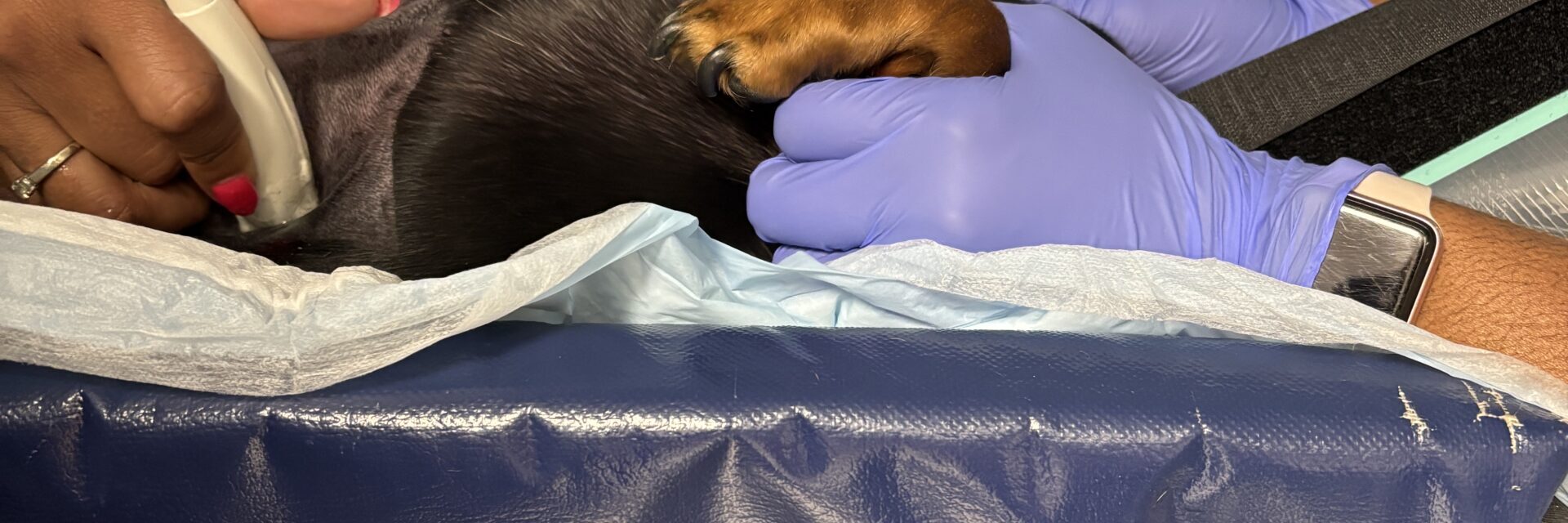
- Abdominal imaging (x-ray and/or ultrasound) to rule out obstruction
- IV fluids to correct dehydration and electrolyte imbalances
- Anti-nausea medication and pain control
- Hospitalization in our 24/7 ICU for severe or critical cases
- Surgery if foreign body or GDV is confirmed
What you can do at home & after
- Bland diet (boiled chicken and rice, or prescription GI diet) for several days
- Small, frequent meals as the GI tract recovers
- Plenty of fresh water; monitor for ongoing dehydration
- Recheck if symptoms return or fail to resolve
- Probiotics or other supportive medications as prescribed
Frequently asked questions
My dog vomited once but seems fine. Should I worry?
A single vomit episode in an otherwise normal, energetic adult dog is usually not an emergency. Watch for repeated episodes, lethargy, refusal to eat or drink, or any change in behavior. If symptoms continue or worsen, come in.
Could it be parvo?
Yes — parvo causes severe vomiting and bloody diarrhea in young or unvaccinated dogs. We run an in-house parvo test on arrival when symptoms suggest it; results are available in minutes. Confirmed cases are isolated and treated in our isolation ward.
How can I tell if my pet is dehydrated?
Pinch the skin between the shoulder blades and release. If it doesn’t snap back quickly, your pet is dehydrated. Tacky or dry gums and sunken eyes are also signs. Come in for IV fluid support.
What if my puppy or kitten is vomiting?
Bring them in. Young animals dehydrate fast and have less reserve. Even one or two vomiting or diarrhea episodes can become serious in a puppy or kitten.