
Splenic mass and internal bleeding: the silent emergency in older dogs.
This often comes out of nowhere. A previously healthy older dog suddenly collapses, has pale gums, or seems exhausted. The most common cause is a ruptured splenic mass — a true emergency that requires stabilization, transfusion, and surgery.
The spleen is a blood-filled organ that can develop benign or malignant masses, primarily in middle-aged and older dogs. When these masses rupture, blood pools in the abdomen, blood pressure drops, and shock develops quickly. Hemangiosarcoma is the most common splenic tumor in dogs, but not every splenic mass is cancer.
Warning signs — come in immediately
- Sudden weakness or collapse
- Pale, white, or grey gums
- Rapid, weak pulse
- Distended or painful abdomen
- Lethargy that comes on quickly
- Cold extremities
- Episodes of weakness that resolve, then recur (small bleeds before a major rupture)
Risk factors & who’s most at risk
- Middle-aged to senior dogs (typically 8+ years old)
- Large breeds — German Shepherds, Golden Retrievers, Labradors
- Previous splenic abnormality found on imaging
- Dogs with known cancer history
Emergency treatment at Dogwood
- Immediate IV fluid resuscitation and shock stabilization
- Blood transfusion when indicated
- Abdominal ultrasound or FAST scan to confirm the bleed
- Bloodwork including coagulation panel and TEG
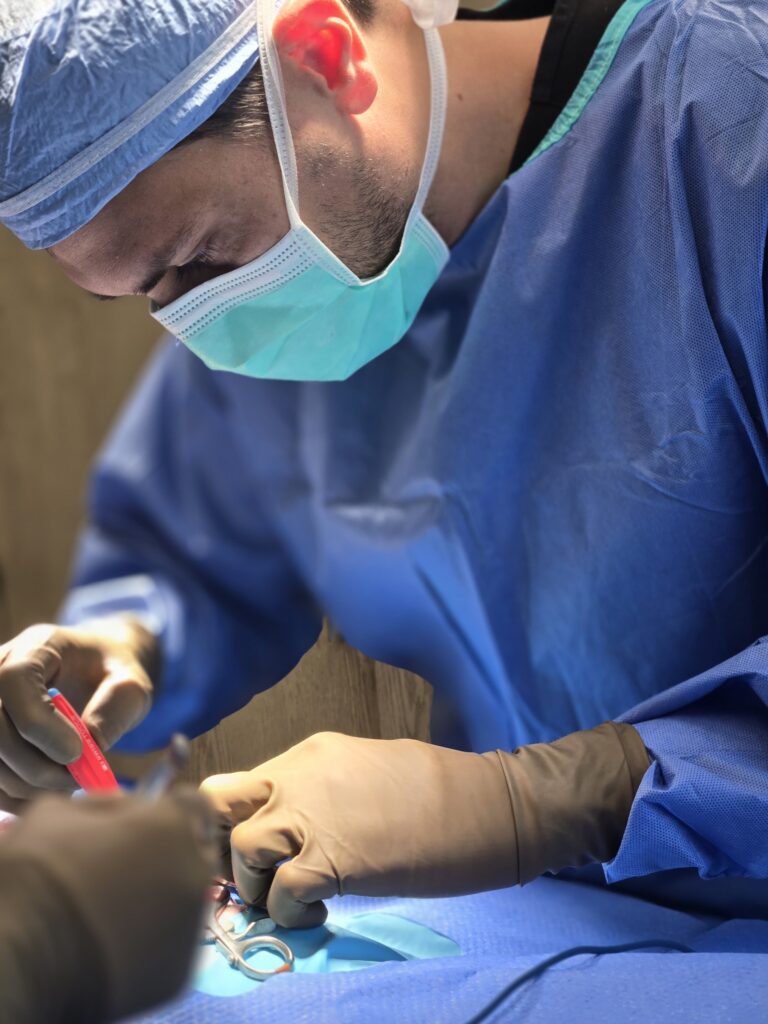
- Emergency splenectomy (surgical removal of the spleen)
- Histopathology to determine if the mass is benign or malignant
- ICU monitoring overseen by board-certified critical care specialists
What you can do at home & after
- 2–3 days hospitalization for monitoring and pain management
- Restricted activity for 2 weeks post-surgery
- Recheck appointments to monitor incision and bloodwork
- If hemangiosarcoma is confirmed, discussion of chemotherapy with our oncology team
- Quality-of-life conversations are always part of cancer planning
Frequently asked questions
How do I know if my dog has internal bleeding?
Sudden weakness, pale gums, collapse, or a distended abdomen are the classic signs. We confirm with a quick abdominal ultrasound or FAST scan to look for free fluid (blood) in the belly.
Is splenectomy a major surgery?
It’s a significant surgery, but dogs do remarkably well without their spleens. The liver and other organs take over the spleen’s functions. Most dogs are walking, eating, and going home within 2–3 days.
If it’s hemangiosarcoma, how long will my dog live?
Untreated, average survival after surgery alone is 2–3 months. With chemotherapy, average survival extends to 5–7 months, with some dogs living over a year. Our oncology team will discuss options based on your specific case.
Can splenic masses be prevented?
Not directly, but routine senior bloodwork and imaging can sometimes catch a mass before it ruptures. Annual or semiannual exams matter especially in at-risk breeds.
Sudden weakness? Don’t wait.
Internal bleeding from a splenic mass progresses fast. If your dog has collapsed or has pale gums, come in immediately.