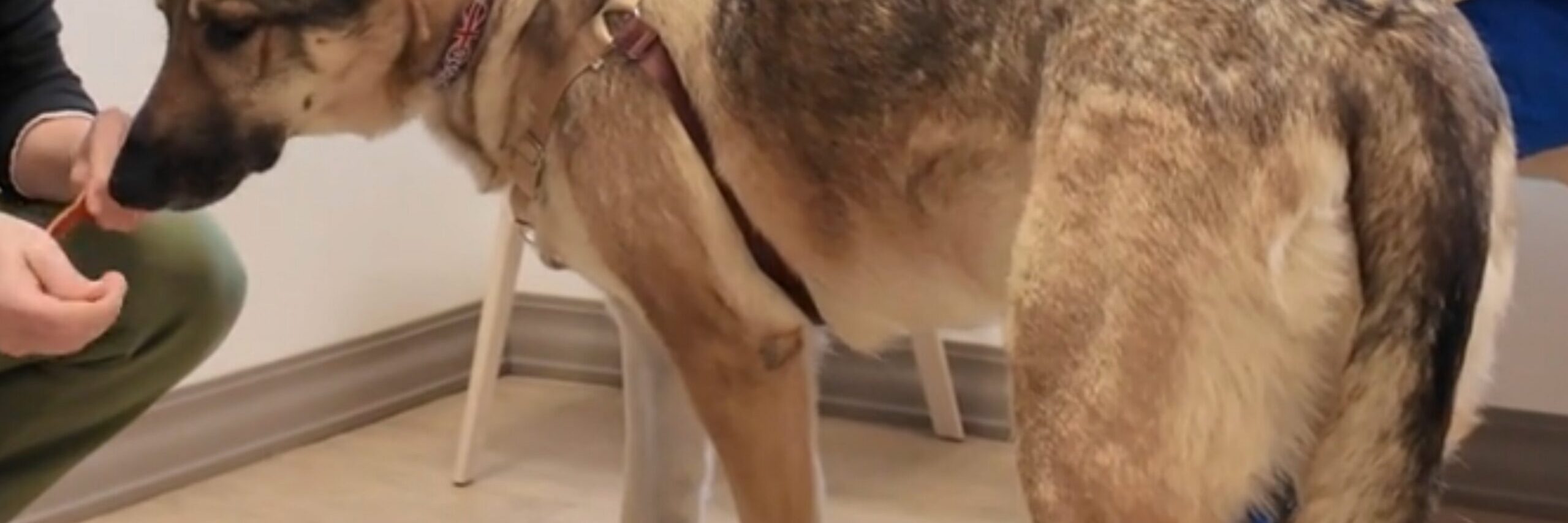
GDV (bloat) in dogs: a deep-chested dog’s most dangerous emergency.
This is an emergency. Gastric Dilatation-Volvulus (GDV) — commonly called “bloat” — is one of the fastest-killing emergencies in dogs. Without surgery, dogs can die within hours. If you see a swollen belly and unproductive retching, come in immediately.
This is an emergency. If your dog has a swollen, hard abdomen, is retching without producing vomit, and seems restless or in pain, come to Dogwood immediately. Open 24/7 — (404) 609-1234.
GDV happens when the stomach fills with gas and rotates on itself, cutting off blood supply and the ability to vomit, burp, or empty. Pressure builds on major blood vessels, organs lose perfusion, and shock develops rapidly. Surgery is the only definitive treatment.
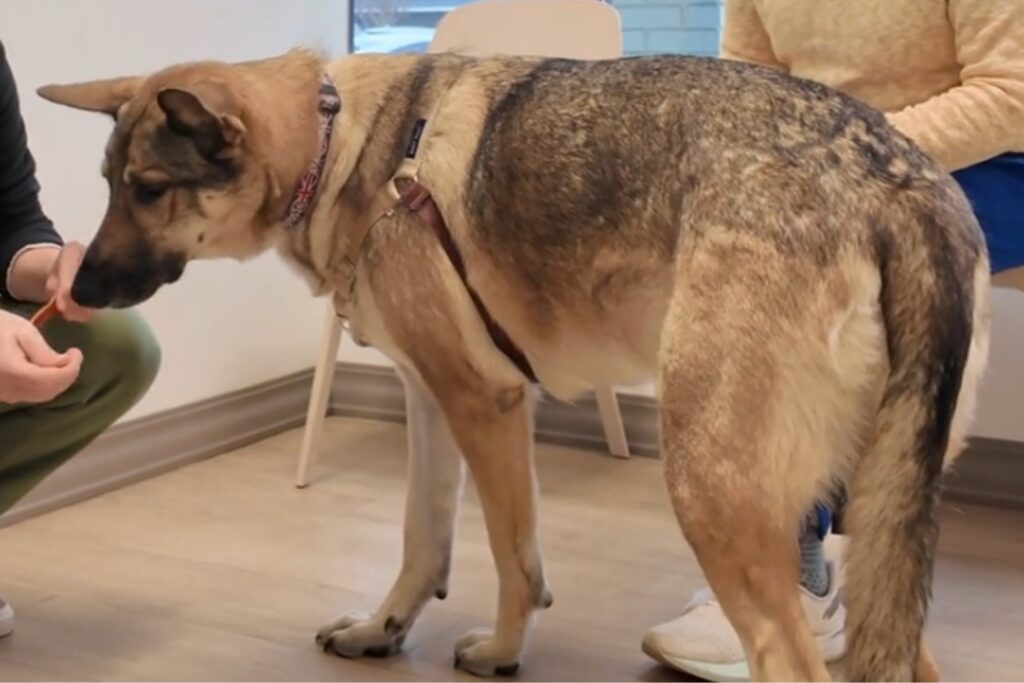
Warning signs — come in immediately
- Swollen, hard, or distended abdomen (often the first visible sign)
- Unproductive retching — trying to vomit but bringing nothing up
- Excessive drooling
- Pacing, restlessness, or inability to get comfortable
- Pale gums, weakness, or collapse
- Rapid heart rate and breathing
Risk factors & who’s most at risk
- Deep-chested breeds — Great Danes, German Shepherds, Standard Poodles, Weimaraners, Setters
- Older, large-breed dogs
- Eating one large meal per day
- Eating quickly or from elevated bowls
- Heavy exercise immediately before or after eating
- Stress, anxiety, or recent kenneling
- Family history of GDV
Emergency treatment at Dogwood
- Immediate IV fluids and shock stabilization
- Gastric decompression to release trapped gas and pressure
- Emergency surgery to derotate the stomach and assess tissue viability
- Gastropexy (surgically tacking the stomach to the body wall) to prevent recurrence
- ICU monitoring with telemetry, oxygen support, and pain management overseen by board-certified critical care
What you can do at home & after
- 2–5 days hospitalization depending on severity
- Soft food and small frequent meals during recovery
- Activity restriction for 2–3 weeks post-surgery
- Recheck appointments to monitor incision and healing
- Long-term feeding strategies to reduce future risk
Prophylactic gastropexy can be performed at the time of spay or neuter for high-risk breeds. Talk to our surgical team about this preventive option.
Frequently asked questions
How fast does GDV become fatal?
Without treatment, GDV can be fatal within hours. The twisted stomach cuts off blood flow, organs begin to fail, and dogs go into shock quickly. Time from first symptoms to surgery is the single biggest factor in outcome.
Can my dog survive GDV?
Survival rates with prompt surgery are 75–90%. The earlier surgery happens, the better. Dogs that are stable at presentation and receive surgery within a few hours of symptom onset have the best outcomes.
Will my dog need a gastropexy?
Yes — almost always. Once a dog has had GDV, the recurrence rate without gastropexy is over 75%. Tacking the stomach to the body wall during surgery dramatically reduces the chance of it twisting again.
How is GDV different from simple bloat?
‘Bloat’ loosely refers to a distended abdomen, but GDV (gastric dilatation-volvulus) specifically means the stomach has both filled with gas AND rotated. GDV is the surgical emergency. Simple gastric dilation without rotation can sometimes be managed without surgery.
Time matters. Come in immediately.
If your dog has a swollen abdomen and is retching unproductively, this is a life-threatening emergency. Walk in 24/7. Give our team a call at (404) 609-1234 to receive immediate assistance.