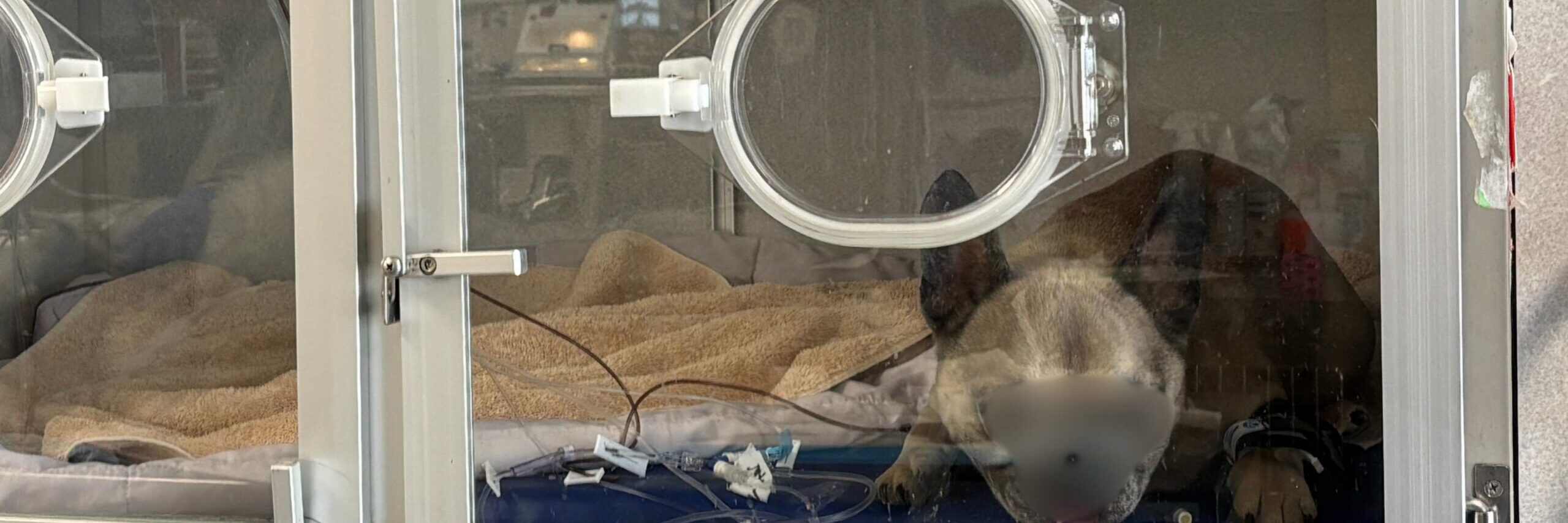
Respiratory distress: when your pet can’t catch their breath.
Breathing problems are always an emergency. Whether the cause is heart failure, pneumonia, asthma, foreign body, or trauma, pets in respiratory distress decompensate quickly without treatment. Dogwood is equipped with high-flow oxygen, ICU monitoring, and board-certified critical care.
This is an emergency. If your pet is breathing heavily at rest, has bluish gums, is open-mouth breathing (especially cats), or is panicking and unable to settle, come to Dogwood immediately. Open 24/7 — (404) 609-1234.
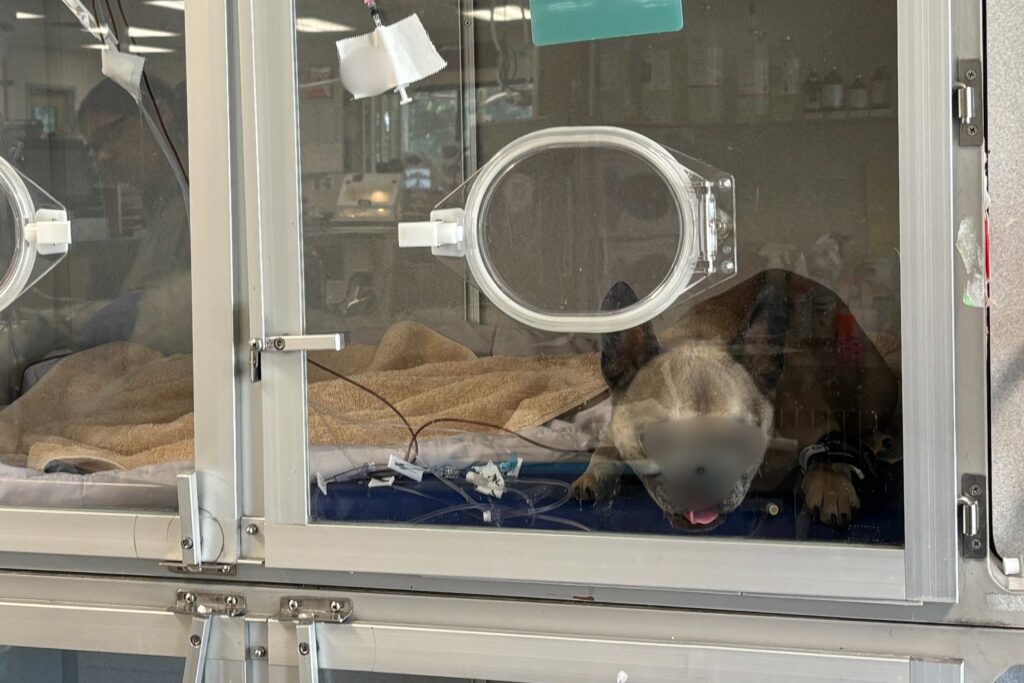
Respiratory distress can come on suddenly or build slowly. In cats, it’s especially dangerous because they hide symptoms until late in the disease process. Common causes include congestive heart failure, asthma, pneumonia, pleural effusion, foreign body aspiration, brachycephalic airway syndrome, smoke inhalation, and trauma.
Warning signs — come in immediately
- Heavy or labored breathing at rest
- Open-mouth breathing in cats (always abnormal)
- Bluish or grey gums (cyanosis)
- Extended neck and elbows out, trying to maximize airflow
- Anxious, restless, unable to lie down
- Loud, harsh, or wheezy breathing sounds
- Coughing — especially soft, persistent, or wet sounding
- Collapse or fainting episodes
- Pale or muddy gum color
Risk factors & who’s most at risk
- Brachycephalic breeds (Bulldogs, Pugs, Frenchies, Persians) — airway syndrome risk
- Senior pets with heart disease
- Cats with asthma or chronic respiratory disease
- Recent toxin exposure or trauma
- Heat exposure — especially in flat-faced breeds
- Recent anesthesia or surgery (post-op respiratory issues)
- Smoke inhalation, drowning, or near-drowning events
Emergency treatment at Dogwood
- Immediate oxygen support — oxygen cage, mask, or high-flow nasal cannula
- Stabilization in a low-stress environment (especially cats)
- Imaging once stable — chest x-ray and/or ultrasound to identify the cause
- Thoracocentesis (removing fluid or air from the chest cavity) when indicated
- IV medications — bronchodilators, diuretics for heart failure, antibiotics for pneumonia
- Critical care monitoring with telemetry, pulse oximetry, and arterial blood gases
- Mechanical ventilation when needed (advanced respiratory support)
What you can do at home & after
- Long-term medications based on diagnosis (heart, asthma, etc.)
- Activity restriction during recovery
- Avoid smoke, perfumes, and strong cleaning products
- Weight management if obesity contributes
- Recheck imaging and bloodwork as scheduled
- Cardiology consultation for confirmed heart disease
Cats and open-mouth breathing. Healthy cats almost never breathe with their mouth open. If your cat is panting like a dog, that is a critical emergency — come in immediately.
Frequently asked questions
My dog is panting heavily. Is that an emergency?
Panting in dogs is often normal — especially after exercise, in heat, or when excited. It becomes concerning when it occurs at rest, is paired with lethargy or pale gums, or doesn’t resolve. When in doubt, come in — we’ll triage immediately.
My cat is breathing fast. Should I come in?
Yes. Healthy cats breathe 20–30 breaths per minute at rest. Anything over 40 at rest is abnormal. Open-mouth breathing or extended-neck posture is a critical emergency.
What is high-flow oxygen therapy?
High-flow oxygen delivers warmed, humidified oxygen at higher rates and concentrations than standard masks or cages. It supports patients in severe respiratory distress without invasive intubation, and can be the difference between recovery and ventilator support.
Could it be heart failure?
In older dogs and cats with respiratory distress, congestive heart failure is high on the list. Diuretics, oxygen, and cardiac medications can dramatically improve symptoms. Our cardiology consultation is integrated into emergency care.
Breathing trouble? Don’t wait.
Respiratory emergencies progress fast. Drive carefully and come in — oxygen support is ready any hour. If you have any questions prior to visiting, give our professionals a call at (404) 609-1234 to receive assistance.