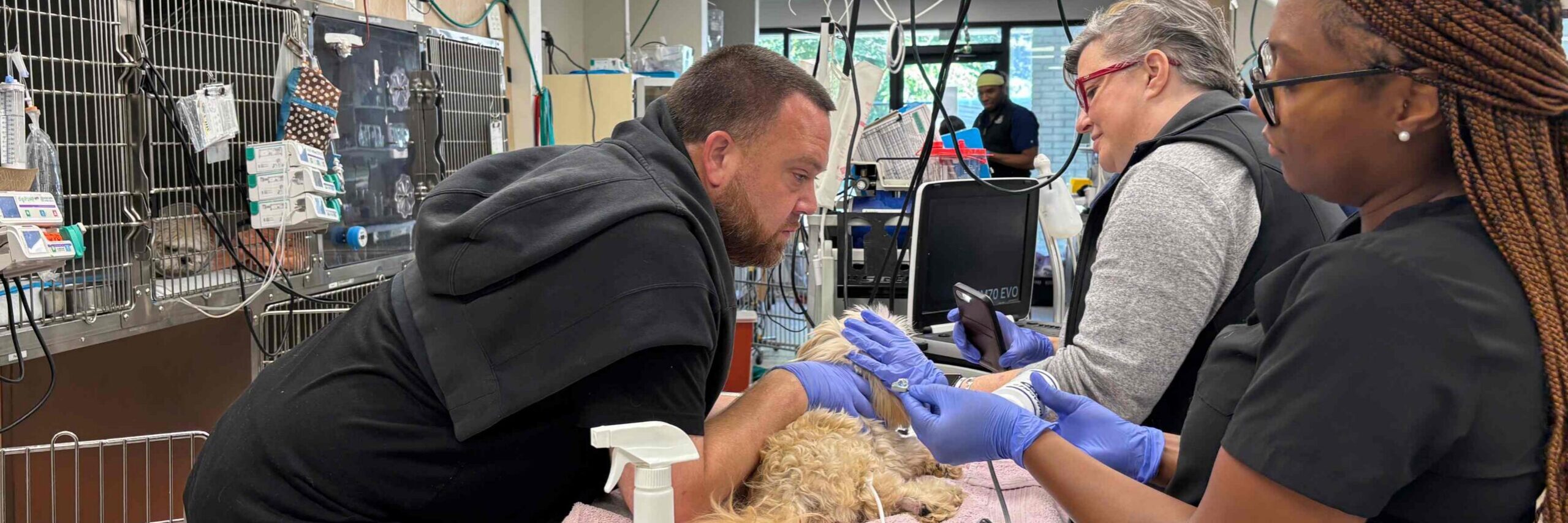
When to bring your pet to the emergency clinic: a guide for Atlanta pet owners.
Most pet families ask this question at 9 p.m. on a Sunday. Dogwood Veterinary Specialty & Emergency in Marietta offers a simple framework — and the reassurance that, sometimes, it’s okay to wait until morning.
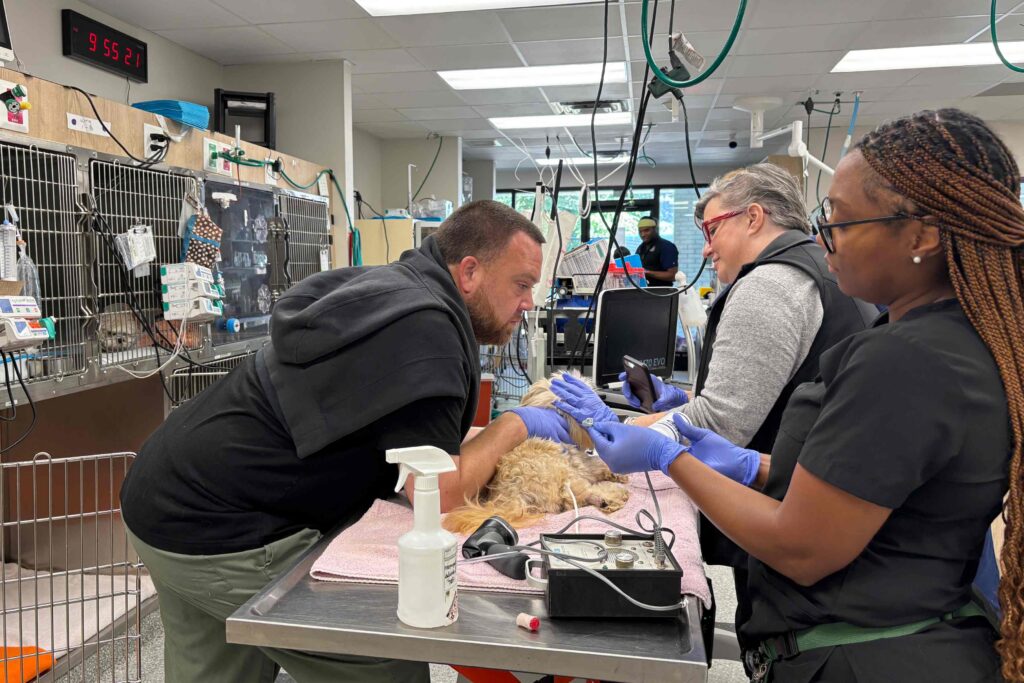
Almost every pet owner has had this exact moment.
It’s late, your dog seems off, your cat threw up an hour ago, or the kids noticed your puppy is limping after dinner. You start Googling. You’re trying to figure out whether to load everyone into the car right now or wait until your family veterinarian opens in the morning.
That decision is hard, even for experienced pet families. Below is the simple framework the Dogwood team uses with the families we triage every day — when to bring your pet in immediately, what can usually wait for your family veterinarian or an urgent care visit, and what’s most often safe to monitor at home overnight.
Come in immediately — these signs need urgent care.
Certain signs mean your pet needs to be seen right now. Don’t wait, don’t watch — head to the nearest 24/7 emergency animal hospital in Atlanta. If you’re more than a few minutes away, calling ahead can help the team prepare for your arrival.
- Difficulty breathing — labored breathing, gasping, blue or gray gums, or noisy breathing at rest. In cats, open-mouth breathing is almost always an emergency.
- Repeated vomiting — more than two or three episodes in a few hours, vomiting blood, or vomiting paired with weakness or lethargy.
- Bloated, distended abdomen — especially in deep-chested dogs trying to vomit without producing anything. This can be GDV (“bloat”), a life-threatening surgical emergency.
- A male cat straining in the litter box — pacing, crying, or producing little to no urine is a urinary blockage and is fatal within hours if untreated.
- Collapse, fainting, or sudden inability to stand or walk.
- Seizures lasting more than two to three minutes, or multiple seizures in a row.
- Pale, white, blue, gray, or muddy gums.
- Major trauma — hit by car, fall from height, dogfight, severe bite wound.
- Suspected toxin ingestion — chocolate, xylitol, grapes/raisins, rodenticide, antifreeze, lilies (in cats), marijuana, or any prescription medication. Bring the packaging if possible.
- Heavy bleeding that doesn’t stop with several minutes of firm pressure.
- Heatstroke signs — excessive panting that won’t stop, bright red or tacky gums, stumbling, or collapse after time outside.
- An eye that is bulging, suddenly cloudy, or has a visible injury.
- Sudden severe pain — crying out, panting at rest, hiding, unable to settle.
- A pet who is truly uncomfortable, even from something that isn’t strictly life-threatening — sometimes a severe ear infection, an angry skin flare, or another painful condition is bothersome enough that your pet can’t rest, can’t stop crying or scratching, and can’t be left to wait days for an appointment. If you can’t ease the discomfort at home, bring them in.
Call your family veterinarian today — or visit urgent care.
These signs aren’t immediately life-threatening but shouldn’t wait days. Your family veterinarian is the best first call. If you can’t get an appointment same-day, walk-in urgent care for pets can fill the gap.
- Mild vomiting or diarrhea (one or two episodes) when your pet is otherwise acting normal.
- Mild limping that’s lasted more than a day, or that doesn’t improve with rest.
- Ear infections — head shaking, scratching at ears, foul smell, or visible discharge.
- Skin issues — hot spots, persistent itching, hair loss, or a small wound that needs cleaning.
- Eye redness or mild discharge without bulging or trauma.
- Possible urinary tract infection — frequent urination, small amounts, mild straining.
- Mild allergic reaction with localized swelling, but no facial swelling or breathing trouble.
- Decreased appetite that has lasted longer than 24 hours.
- Anal gland concerns, scooting, mild scratching at the rear.
Some things resolve on their own.
Many of the things pet owners worry about at 10 p.m. resolve on their own. These are usually safe to monitor overnight if your pet is otherwise behaving normally:
- A single isolated episode of vomiting after which your pet feels better and acts normally.
- One soft stool when your pet is bright, alert, and eating.
- Mild reluctance to eat one meal, with normal energy and water intake.
- Brief scratching or licking after grooming, bathing, or a new yard treatment.
- A small scrape that’s already clean and not bleeding.
- Slight tiredness after a long day of activity.
If anything changes — your pet’s energy drops, vomiting repeats, gums look pale, breathing changes, or they just don’t seem right — that’s the moment to call. You know your pet better than anyone.
Call. There is no charge, and no question is too small.
This is the most important line in the whole article. If you are reading this trying to decide, that uncertainty itself is a reason to pick up the phone. Both your family veterinarian (during their hours) and a 24/7 emergency hospital can triage your concern over the phone — often in under five minutes — and tell you whether your pet needs to be seen now, in the morning, or whether they can simply be watched.
There is no charge to call, and no question is too small. Give our professionals a call at (404) 609-1234 to receive support.
We work as a team with your primary care veterinarian.
If you ever have a concern about your pet’s health, reach out to your family veterinarian or Dogwood’s team. Dogwood works in close collaboration with primary care veterinarians across the Atlanta metro — sharing records, coordinating treatment plans, and making sure every pet gets the right care at the right place, at the right time.