7 Things That Happen in a Veterinary ICU
 7 Things That Happen in Dogwood’s Veterinary ICU & Why They Could Save Your Pet’s Life
When a veterinarian tells you your pet needs the ICU, it’s natural to feel scared. At Dogwood in Marietta, GA, our five full-time board-certified critical care specialists run a state-of-the-art ICU designed to give critically ill pets the best possible chance. Here’s what that actually looks like from the inside.
1. Continuous Vital Sign Monitoring
ICU patients at Dogwood are monitored around the clock — heart rate, respiratory rate, blood pressure, oxygen levels, and temperature. Unlike a general practice where vitals may be checked once or twice daily, our ICU team evaluates patients continuously. Changes are caught in minutes, not hours — and for pets on the edge of stability, this vigilance is often what makes the difference.
2. IV Fluid Therapy and Electrolyte Management
Critically ill pets almost always have fluid, electrolyte, and acid-base imbalances that, if uncorrected, are fatal. Our critical care specialists calculate and adjust fluid protocols in real time based on each patient’s ongoing response — a dynamic, data-driven process requiring specialist expertise far beyond simply ‘giving fluids.’
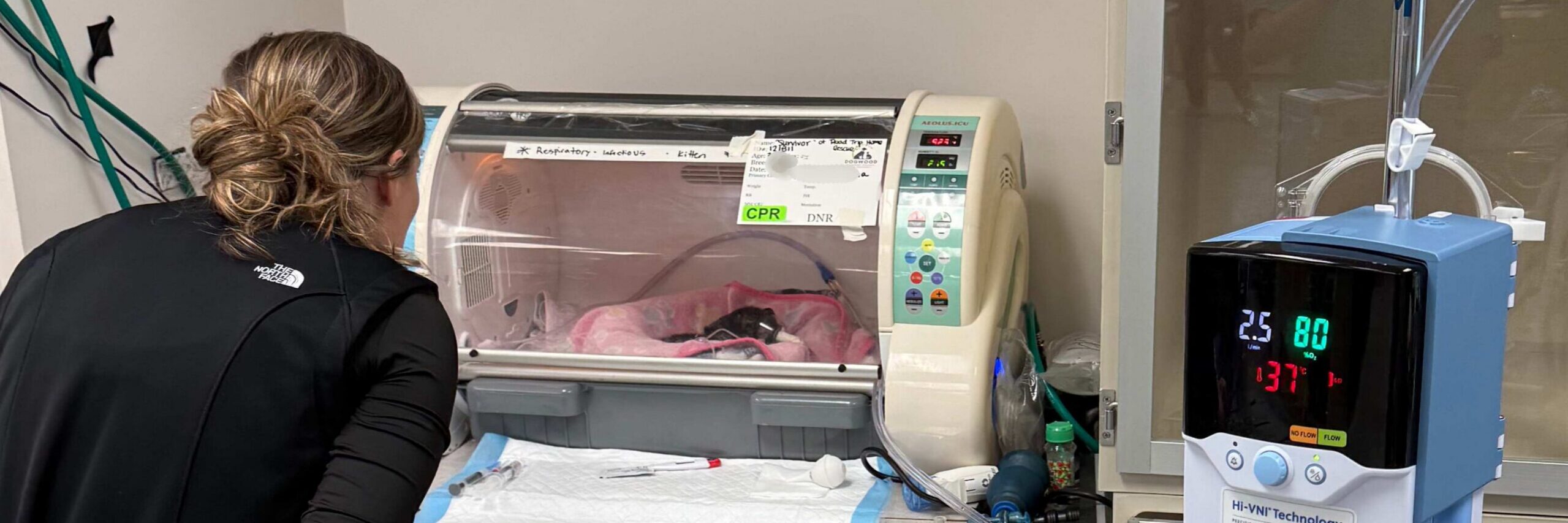
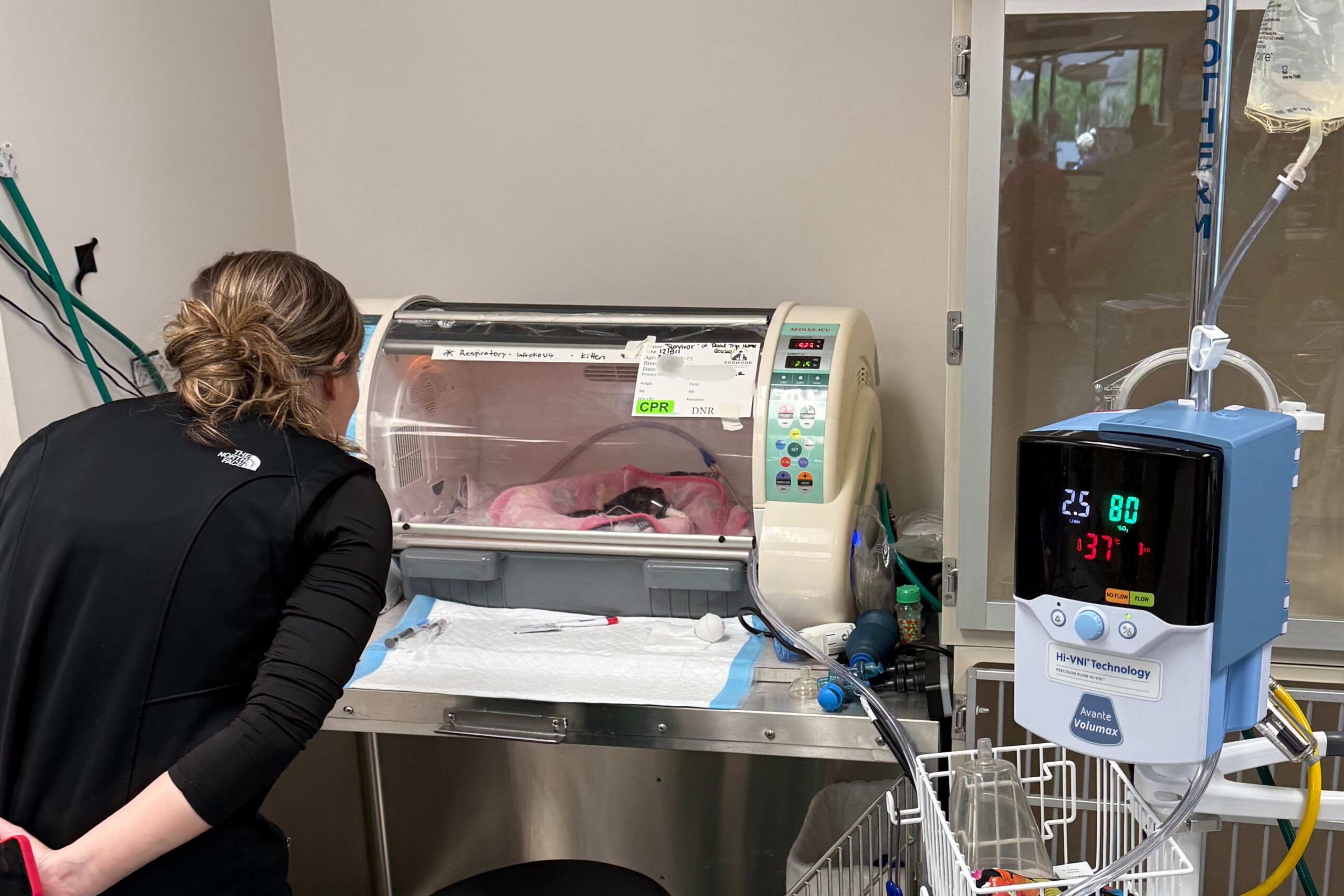
3. Oxygen Support and Respiratory Assistance
Pets with pneumonia, congestive heart failure, chest trauma, or pulmonary disease may need supplemental oxygen or mechanical ventilation. Our ICU is equipped with oxygen cages, nasal cannulas, and ventilators. Respiratory crises are among the most time-sensitive emergencies in veterinary medicine — having the right equipment immediately available saves lives.
4. Multimodal Pain Management
Pain in critically ill patients actively delays recovery by keeping the body in a stress response. Our team uses evidence-based multimodal protocols combining IV opioids, local nerve blocks, and non-opioid analgesics. Our board-certified anesthesiologist — the only one in Atlanta — oversees complex pain cases.
5. Nutritional Support
Critically ill pets often stop eating, but nutrition is essential for healing. Depending on condition, our team may place a feeding tube, provide total parenteral nutrition (IV), or offer assisted feeding. Maintaining caloric intake during critical illness significantly improves recovery time.
6. Specialist Collaboration Under One Roof
Our ICU team works directly alongside board-certified specialists in Surgery, Internal Medicine, Cardiology, and Oncology. When an ICU patient needs surgical intervention or specialist consultation, it happens immediately — not after a referral. This integration of care is rare in veterinary medicine and directly improves outcomes.
7. Transparent Communication with You
Our critical care team provides regular updates, and you can call us for an update at any time. Before any significant procedure or change in treatment, we discuss all options clearly — including cost — so you can make informed decisions. You are part of your pet’s care team.
Conditions That Require Veterinary ICU Care
- Sepsis or septic shock
- Respiratory failure or pneumonia
- Post-surgical recovery from major procedures
- Acute kidney or liver failure
- Severe trauma — car accident, animal attack, fall
- Toxin ingestion with systemic effects
- Diabetic ketoacidosis (DKA)
- Pancreatitis with multi-organ involvement
- Neurological emergencies — status epilepticus, spinal cord injury
Dogwood’s ICU: Five board-certified critical care specialists. 24/7 monitoring. State-of-the-art intensive care. Marietta, GA. Give our professionals a call at (404) 609-1234 to receive assistance.