
Emergency C-Section for Dogs and Cats: When Labor Becomes a Crisis
Watching your dog or cat go through labor can be stressful under the best circumstances. But when something goes wrong, every minute matters. If your pet has been actively contracting for more than 30 minutes without delivering a puppy or kitten, you may be facing a life-threatening emergency for both the mother and her babies.
There are clear warning signs that labor has become a crisis. Recognizing them quickly and acting decisively can mean the difference between a healthy litter and a devastating outcome.
Signs that labor has become an emergency include: strong, persistent contractions for 30 minutes or more with no delivery; dark green or black vaginal discharge, which can indicate placental separation; extreme lethargy or collapse in the mother; visible distress, crying out, or biting at her abdomen; a puppy or kitten visibly stuck in the birth canal; and more than two hours passing between deliveries when you know more babies remain.
If you are seeing any of these signs, do not wait. Contact an emergency veterinarian immediately.
What Is Dystocia?
Dystocia is the medical term for a difficult or obstructed birth. In dogs and cats, dystocia occurs when the mother cannot deliver her offspring naturally due to physical or physiological problems. This is not a rare occurrence. Studies suggest that dystocia affects roughly 5% of all canine births, with the rate climbing significantly higher in certain breeds.
There are two broad categories of dystocia. Maternal dystocia involves problems with the mother, such as inadequate contractions (uterine inertia), a narrow birth canal, or exhaustion after prolonged labor. Fetal dystocia involves problems with the babies, including oversized puppies or kittens, abnormal positioning such as breech presentation, or developmental abnormalities that prevent normal passage through the birth canal.
In many cases, medical management with calcium or oxytocin can help restart stalled labor. But when medical intervention fails, or when there are clear signs of fetal distress or obstruction, a cesarean section becomes the safest and often the only option to save the mother and her babies.
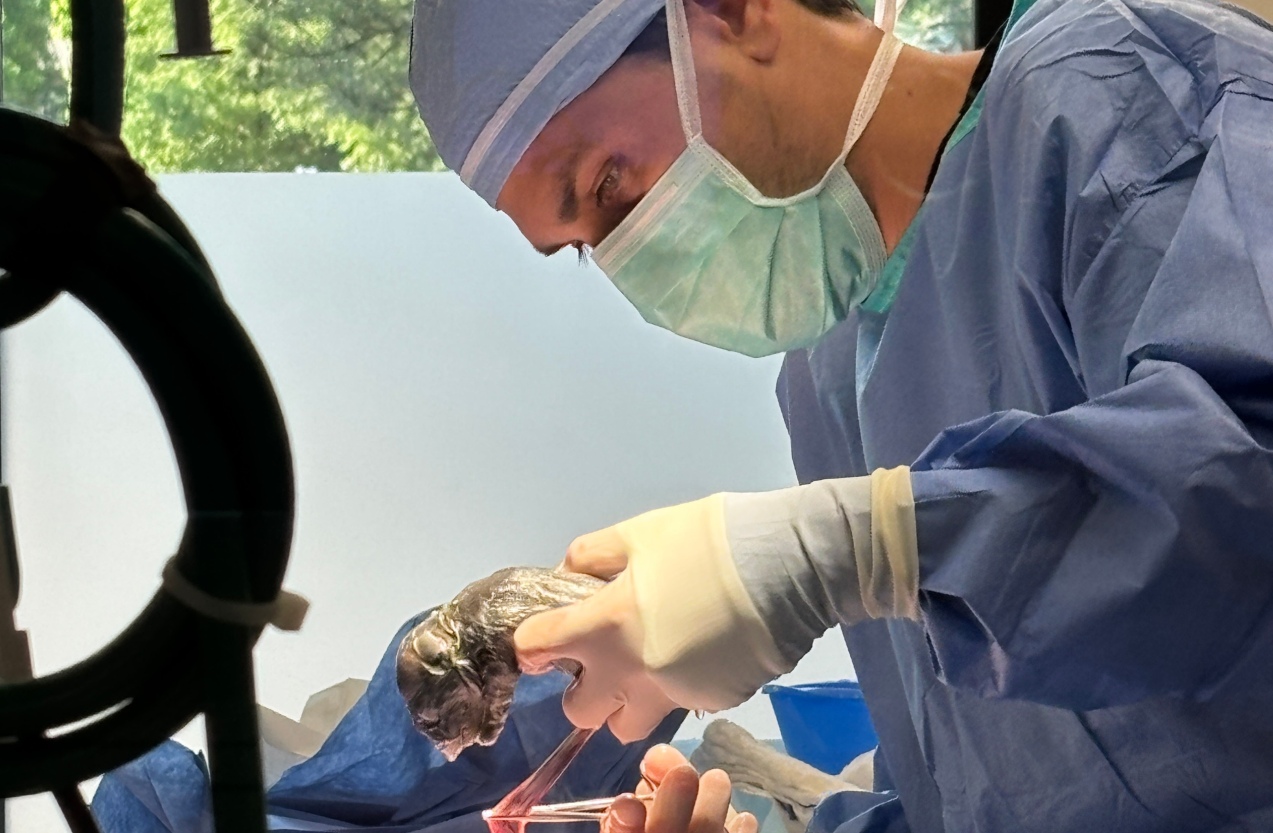 When to Go to the Emergency Room
Knowing exactly when to seek emergency care during labor can save lives. Use these specific time markers as your guide:
- 30 minutes of strong contractions with no delivery: If your dog or cat is actively pushing with visible abdominal effort and no puppy or kitten has appeared within 30 minutes, this is an emergency.
- More than 2 hours between puppies or kittens: Once active delivery has started, there should not be a gap of more than two hours between offspring, especially if you know more remain. Prolonged intervals suggest uterine fatigue or obstruction.
- Green or black vaginal discharge before the first delivery: Green discharge indicates placental separation. Once this occurs, the puppies or kittens are losing their oxygen supply, and time is critical.
- Collapse, extreme weakness, or pale gums: These signs suggest the mother may be in shock, experiencing internal bleeding, or suffering from severe metabolic disturbance. This is a life-threatening emergency for her, not just the litter.
- A puppy or kitten stuck in the birth canal: If you can see part of a baby but it is not progressing despite contractions, do not attempt to pull it out. Get to an emergency vet immediately.
When in doubt, call. It is always better to be seen and sent home than to wait too long and lose a mother or her litter.
Planned vs. Emergency C-Sections
Not all cesarean sections are emergencies. For certain breeds and high-risk pregnancies, a planned C-section is the safest approach. Brachycephalic breeds such as English Bulldogs, French Bulldogs, Boston Terriers, and Pugs have been selectively bred with large heads and narrow pelvises, making natural delivery extremely difficult and often impossible. For these breeds, veterinary surgeons widely recommend scheduling a C-section before labor begins.
Other situations where a planned C-section may be recommended include a history of previous dystocia, a single-puppy pregnancy where the fetus may grow unusually large, known uterine abnormalities, or breeds with a documented high rate of birthing complications such as Scottish Terriers, Mastiffs, and Chihuahuas.
For breeders, planning ahead is essential. Work with your veterinarian to monitor the pregnancy with radiographs and ultrasound. Progesterone testing can help pinpoint the ideal delivery window, ensuring puppies are mature enough to thrive while avoiding the risks of unplanned labor.
Emergency C-sections, by contrast, are performed when labor has already begun and a crisis develops. These surgeries carry higher risk because the mother may already be exhausted, dehydrated, or in distress, and the babies may be experiencing oxygen deprivation. This is why early recognition of labor complications is so critical. The sooner you arrive at an emergency hospital, the better the outcome for everyone.
What to Expect at Dogwood
When you arrive at Dogwood Veterinary Specialty and Emergency with a pet in labor distress, our team moves quickly. Here is what the process looks like:
- Immediate stabilization. Our emergency team will assess the mother\’s vital signs, check for signs of shock, and place an IV catheter to begin fluid therapy and any medications needed to stabilize her condition.
- Diagnostic imaging. Radiographs allow us to count the number of remaining puppies or kittens, assess their size and position, and determine whether vaginal delivery is still possible or if a C-section is necessary. Ultrasound may be used to evaluate fetal heart rates, which helps us determine how urgently surgery is needed.
- Surgery. If a C-section is indicated, our veterinary surgeons use anesthesia protocols specifically designed for pregnant patients. These protocols minimize drug exposure to the babies while keeping the mother safe and pain-free. The surgery itself typically takes 30 to 60 minutes, depending on litter size and any complications.
- Neonatal care. As each puppy or kitten is delivered, a dedicated team of nurses and technicians is ready to clear airways, stimulate breathing, dry and warm the newborns, and monitor their heart rates. This specialized neonatal support dramatically improves survival rates, especially in emergency situations.
- Mother’s recovery. After surgery, the mother is carefully monitored as she wakes from anesthesia. Pain management is tailored to be safe for nursing, and the team works to reunite mom with her babies as soon as she is stable and alert. Most mothers are able to begin nursing within hours of surgery.
Why Choose Dogwood for Your Pet\’s C-Section
When minutes matter, the hospital you choose makes all the difference. Dogwood Veterinary Specialty and Emergency provides advantages that general practice clinics simply cannot offer during a birthing emergency:
- 24/7 emergency availability. Labor does not wait for business hours. Our emergency room is staffed around the clock, every day of the year. Whether your pet goes into crisis at 2 AM or on a holiday, we are here and ready.
- Specialized surgery department. Our surgeons have completed years of advanced training beyond veterinary school, including residencies focused on surgical techniques. This expertise matters when performing delicate procedures under time pressure on a compromised patient.
- Safer anesthesia protocols. Anesthesia in a pregnant or laboring patient requires specialized knowledge. Our team uses protocols designed to minimize fetal drug exposure and reduce anesthetic risk to the mother, resulting in faster wake-up times for puppies and kittens and safer recovery for mom.
- Dedicated neonatal support. Unlike most clinics, we have trained staff specifically assigned to resuscitate and monitor newborns during and after C-section delivery. This team focus on the babies allows the surgical team to focus entirely on the mother.
- Advanced monitoring and critical care. From blood pressure and oxygen monitoring during surgery to post-operative ICU care if needed, Dogwood provides the full spectrum of support for both mother and litter.
Take Action Now
For breeders: If you are expecting a litter, especially from a brachycephalic breed or a dog with a history of difficult deliveries, do not leave anything to chance. Schedule a consultation with Dogwood to discuss a planned C-section. Progesterone monitoring and prenatal imaging allow us to time the procedure for the best possible outcome.
For pet owners facing an emergency right now: If your dog or cat is in labor and something does not seem right, trust your instincts. Call us at (404) 609-1234 immediately. Our emergency team is available 24 hours a day, 7 days a week. We are located at 1234 Powers Ferry Common SE – Marietta – GA 30067.
Do not wait and wonder. In a birthing emergency, the decision to act quickly is the most important thing you can do for your pet and her babies. Dogwood is here to help, any time, day or night.