
My Dog or Cat Won't Eat: When Loss of Appetite Becomes an Emergency
If your dog or cat has stopped eating, your first instinct is probably to worry—and that’s understandable. Food is one of the most basic signs of health, and when a pet turns away from a meal they normally devour, it gets your attention fast.
Here’s the good news: a single skipped meal isn’t always cause for alarm. Dogs and cats can have off days just like we do. Maybe the weather changed, or there’s a new person in the house, or they simply aren’t hungry right now. But there are also situations where loss of appetite is one of the first clues that something serious is going on inside your pet’s body.
So how do you know the difference between a picky eater and a sick pet? This guide will help you understand when it’s safe to wait, when to try a few things at home, and when it’s time to head to the emergency vet.
How Long Is Too Long Without Eating?
The answer depends on whether you have a dog or a cat—and the distinction matters more than most owners realize.
Dogs can typically go one to two days without eating before the situation becomes medically concerning. That doesn’t mean it’s ideal, but a healthy adult dog who skips a meal or two and is otherwise acting normally is usually not in immediate danger. However, puppies, senior dogs, and dogs with underlying health conditions like diabetes have less room for error.
Cats are a completely different story. If your cat has not eaten for more than 24 to 48 hours, this is a potential medical emergency. Cats are uniquely susceptible to a dangerous condition called hepatic lipidosis—commonly known as fatty liver disease—which can develop in as little as two to three days of not eating. We’ll cover this in more detail later, but the takeaway is simple: a cat that stops eating needs veterinary attention much sooner than a dog.
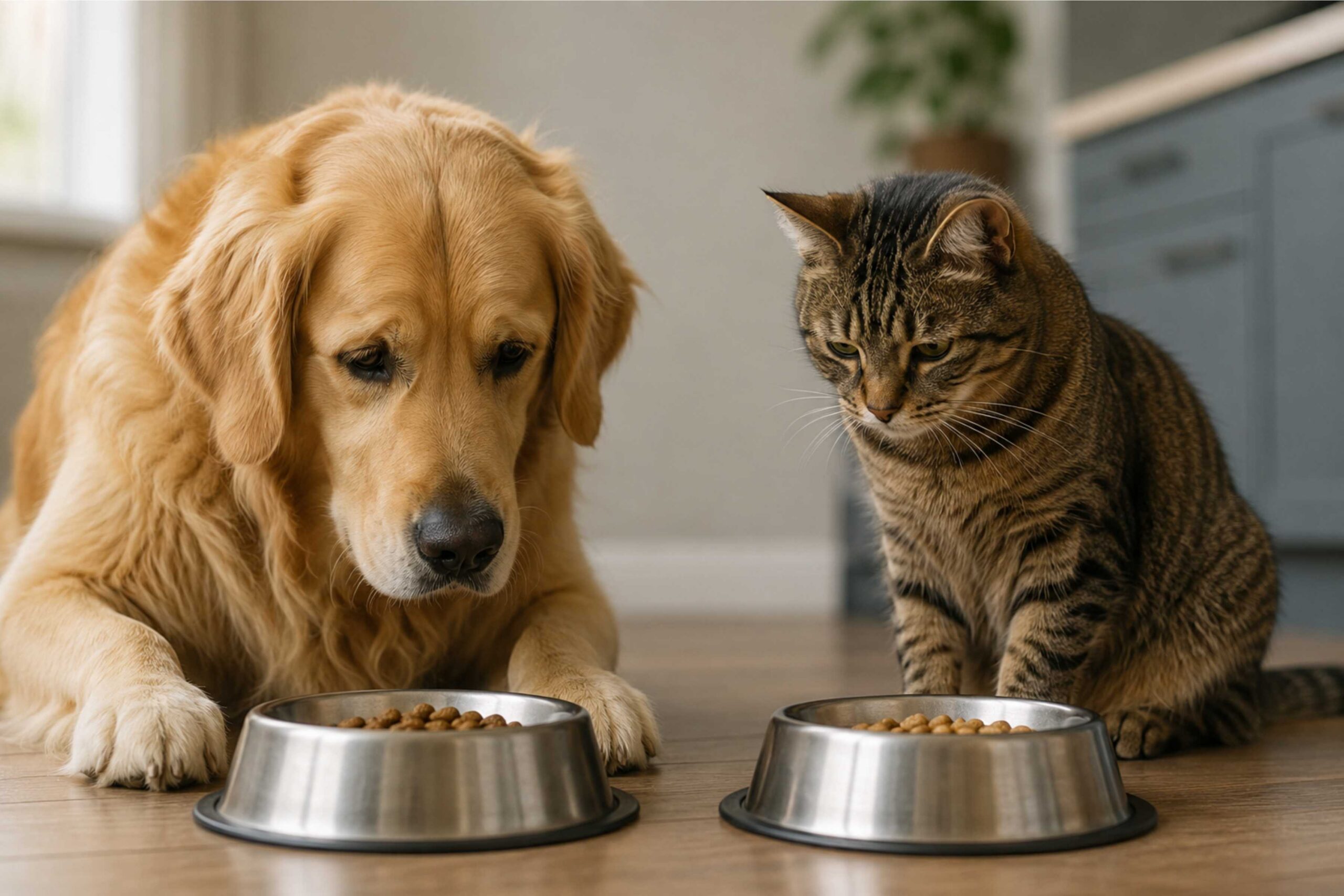 Common Causes of Appetite Loss, Organized by Urgency
Not every case of appetite loss is an emergency, but some causes are more serious than others. Here’s a general framework to help you think about what might be going on.
Mild — Often Resolves on Its Own*
- Stress from changes in the environment, such as a recent move, traveling, boarding, or a new pet in the household
- Picky eating behavior, especially in dogs who have learned that holding out leads to tastier alternatives
- Mild gastrointestinal upset from something they ate, like table scraps or a new treat
- Minor dental discomfort, such as a loose tooth or mild gum irritation
Moderate — Needs Veterinary Evaluation
- Infections, including urinary tract infections, upper respiratory infections in cats, or tick-borne diseases
- Pancreatitis, which causes nausea, abdominal pain, and a strong aversion to food
- Kidney disease, particularly in older cats, which often presents with decreased appetite and increased water intake
- Liver disease, which may cause subtle symptoms early on before becoming serious
Serious — Go to the Emergency Room
- Gastrointestinal obstruction from a foreign body such as a toy, bone fragment, sock, or string
- Gastric dilatation-volvulus (GDV), also known as bloat, which is a life-threatening twisting of the stomach most common in large-breed dogs
- Toxin ingestion, including common household items like xylitol, chocolate, grapes, lilies (extremely toxic to cats), or medications
- Organ failure, whether acute or as the progression of a chronic condition
- Severe pain from trauma, a ruptured mass, or other acute internal injury
Red Flags That Mean Go to the ER Now
A pet who simply isn’t hungry but is otherwise bright, alert, and playful is in a very different category than a pet who won’t eat AND is showing other warning signs. If your dog or cat has stopped eating and you notice any of the following, do not wait—seek emergency veterinary care immediately:
- Vomiting, especially repeated vomiting or vomiting with nothing coming up (unproductive retching)
- Lethargy or unusual weakness—lying around more than normal, reluctance to stand or walk
- A distended, hard, or painful abdomen
- Pale, white, or blue-tinged gums
- Difficulty breathing or rapid, shallow breathing
- Known or suspected exposure to a toxin
- Your pet is diabetic and has stopped eating (this can cause a dangerous blood sugar crash)
- Diarrhea with blood, or dark tarry stools
Any combination of not eating with these symptoms suggests your pet’s body is under significant stress. The emergency team at Dogwood Veterinary Specialty and Emergency is available around the clock to evaluate and stabilize your pet.
What to Try at Home (For Mild Cases Only)
If your pet has only missed one meal and is acting relatively normal, here are a few things you can try before making the trip to the vet:
- Warm the food slightly to release its aroma—this can be especially effective for cats, who rely heavily on smell to decide whether something is appetizing
- Offer a small amount of plain, bland food such as boiled chicken and white rice for dogs, or plain cooked chicken for cats
- Try hand feeding or placing a small amount of food on your finger
- Remove food after 15 to 20 minutes if they don’t eat, and offer it again at the next mealtime rather than leaving it out all day
- Make sure fresh water is always available—dehydration makes everything worse
Important: these at-home strategies are only appropriate for the first 24 hours, and only if your pet is not showing any of the red flags listed above. If there is no improvement after a day, or if your pet’s condition worsens at any point, it’s time to come in.
How We Diagnose the Cause at Dogwood
When you bring your pet to Dogwood for appetite loss, our team will work quickly and thoroughly to figure out what’s going on. The diagnostic approach depends on whether the situation is acute or chronic.
For pets who come through our 24/7 emergency department, the initial workup typically includes a comprehensive physical examination, blood work to evaluate organ function and check for infection, and imaging such as X-rays or ultrasound to look for obstructions, masses, or free fluid in the abdomen.
For pets with a longer history of decreased appetite—the ones who have been eating less and less over weeks or months—our specialists in veterinary internal medicine can dig deeper. Advanced diagnostics may include abdominal ultrasound with fine-needle aspirates, endoscopy, or specialized blood panels to identify conditions like inflammatory bowel disease, chronic pancreatitis, or early-stage organ disease.
The goal is always the same: identify the root cause so we can treat the problem, not just the symptom.
Why Cats Are a Special Case: Hepatic Lipidosis
This section is specifically for cat owners, and it’s one of the most important things in this entire article.
When a cat stops eating, their body begins to mobilize fat stores for energy. Unlike dogs and humans, a cat’s liver is not efficient at processing large amounts of fat all at once. The fat accumulates in the liver cells, impairing liver function and creating a dangerous cycle: the cat feels sicker, eats even less, and the liver damage worsens.
This condition—hepatic lipidosis, or fatty liver disease—can develop in as little as two to three days of a cat not eating. It is one of the most common and most serious liver diseases in cats, and it can be fatal without treatment. Overweight cats are at especially high risk, but any cat who stops eating is vulnerable.
The treatment for hepatic lipidosis involves hospitalization, IV fluids, nutritional support (often through a feeding tube), and close monitoring of liver values. When caught early, most cats recover. When caught late, the prognosis is much worse.
The bottom line: if your cat has not eaten for 24 hours, call your veterinarian. If it has been 48 hours or more, seek emergency care. Do not assume your cat is just being picky.
When to Come to Dogwood
We know it can be hard to tell whether your pet’s appetite loss is something that will pass on its own or something that needs urgent attention. Here is a simple guide:
- For cats: If your cat has not eaten in 24 hours, contact a veterinarian. If it has been 48 hours or your cat is showing any other symptoms, seek emergency care immediately.
- For dogs: If your dog has not eaten for 48 hours, or if they are showing any red flag symptoms such as vomiting, lethargy, or abdominal distension, come to the ER.
- For any pet: If there was a known toxin exposure or your pet is diabetic and not eating, do not wait—come in right away.
Dogwood Veterinary Specialty and Emergency is open 24 hours a day, 7 days a week. Our emergency team is always here, and our internal medicine specialists are available for cases that need advanced diagnostics and ongoing management. You never need a referral to visit our emergency department.
If you’re unsure whether your pet needs to be seen, call us at (404) 609-1234. We’re always happy to help you decide the right next step. Your pet’s health—and your peace of mind—matter to us.